A dry vegetable business can turn highly perishable fresh produce into a more convenient, transportable and shelf-stable ingredient. But profitability does not come from simply drying vegetables and selling them at a higher price. The real business depends on raw-material sourcing, dehydration yield, processing quality, packaging, buyer specifications, operating costs and dependable sales.
For entrepreneurs, farmers, food processors and B2B buyers, that makes a vegetable dehydration business attractive for a simple reason: it adds value to agricultural produce while creating products that can serve food manufacturers, restaurants, wholesalers, retailers and export markets.
Here is how to approach the opportunity commercially.
What Is a Dry Vegetable Business?
A dry vegetable business converts fresh vegetables into dried products through controlled moisture removal. Depending on the product, this can involve washing, cutting, blanching or other pretreatment, followed by hot-air or another suitable drying method.
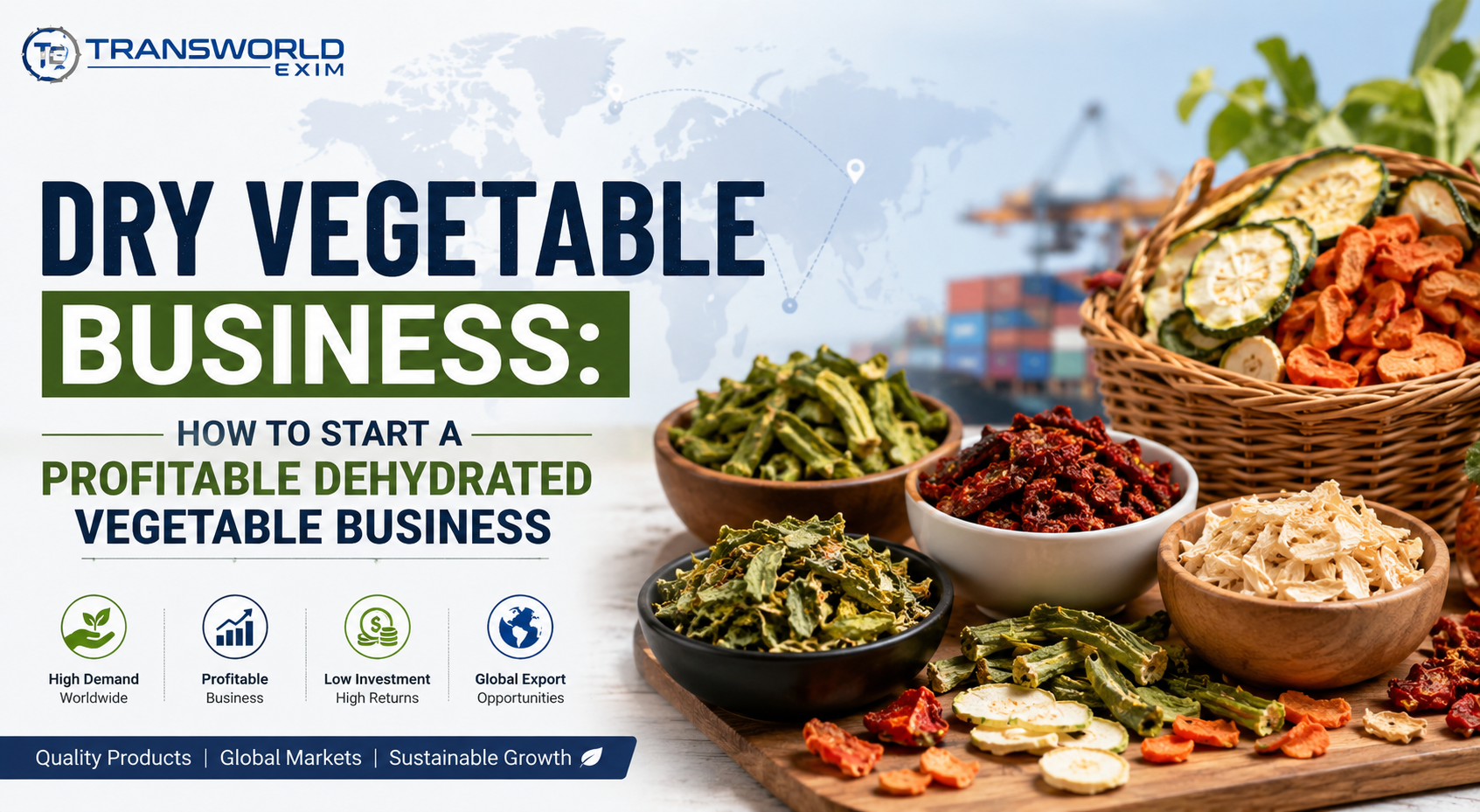
The finished products may include:
- Dried garlic
- Onion flakes, granules and onion powder
- Dried ginger
- Dried carrot
- Dried tomato
- Dried spinach
- Dried cabbage
- Dried beetroot
- Dried bell pepper
- Vegetable flakes, granules and powders
The key advantage is not just longer storage. Dried vegetables are useful because they are easier to handle, transport and incorporate into food products.
Why Can a Vegetable Dehydration Business Be Attractive?
Fresh vegetables contain substantial water, which contributes to their weight, perishability and handling requirements. Dehydration removes much of that water, reducing product weight and creating a more shelf-stable form.
That can open several B2B applications, including instant foods, soups, sauces, seasonings, snack products, institutional kitchens and food manufacturing.
The important point is that yield matters. If a large quantity of fresh vegetables produces a relatively small quantity of finished product, your economics depend heavily on the purchase price of the raw material, drying efficiency, labor, utilities, packaging and selling price.
That is why a profitable dry vegetable business starts with costing, not equipment.
Which Products Should You Start With?
Choosing products based only on what is easy to dry can be a mistake. Start with products that have a defined buyer base and can be produced consistently.
Dried garlic is one example. It can be sold as flakes, granules or powder and used in seasoning, sauces, prepared foods and other applications.
Onion powder is another commercially useful product because powdered onion can serve food manufacturers and seasoning businesses that need consistent particle size and supply.
Other vegetables can be selected according to local availability, seasonal pricing, processing capability and buyer demand.
A broader portfolio can also reduce dependence on one crop. However, expanding too quickly can create unnecessary inventory and quality-control problems.
How Does the Commercial Dehydration Process Work?
A typical production flow looks like this:
Raw vegetable sourcing → sorting → washing → peeling or trimming → cutting → pretreatment where required → dehydration → cooling → inspection → grading → packaging → storage
Every stage influences the final product.
Uniform slicing helps create more consistent drying. Pretreatment may be required for certain vegetables and product specifications. Drying conditions need to be controlled because inadequate drying can create quality or safety problems, while excessive processing can damage color, texture or flavor.
For commercial production, moisture control, hygiene, contamination prevention and storage conditions should be treated as core operating requirements rather than afterthoughts.
What Equipment Is Needed?
The equipment depends on scale and product range, but a commercial operation may require:
- Vegetable washing equipment
- Cutters or slicers
- Peeling equipment where necessary
- Blanching or pretreatment equipment
- Dehydrators, tray dryers or other suitable drying systems
- Grinders or pulverizers for powders
- Sieving equipment
- Weighing systems
- Sealing and packaging equipment
- Storage facilities
The right setup is a capacity decision, not simply a machinery-shopping exercise.
A larger dryer may increase production capacity, but it can also increase capital requirements and operating costs. Your equipment should match expected order volume, available raw materials, labor and target customers.
How Much Does It Cost to Start?
There is no single reliable investment number for every dry vegetable business.
A small operation using modest processing capacity will have a very different cost structure from a commercial plant producing bulk ingredients for export.
Your budget typically needs to account for:
- Processing and drying equipment
- Facility preparation
- Electrical and utility requirements
- Packaging equipment
- Quality-control arrangements
- Initial raw-material purchases
- Labor
- Packaging materials
- Storage
- Transportation
- Working capital
Rather than asking only, "What is the machine cost?", calculate the cost of producing one sellable kilogram. That gives you a more useful foundation for pricing and break-even analysis.
Where Does the Profit Come From?
The central formula is straightforward:
Profit = Sales revenue - total operating and business costs
But the economics behind that equation need careful attention.
Your cost per finished kilogram can change because of fresh-to-dried yield, raw vegetable prices, labor, energy consumption, packaging, wastage, maintenance and transport.
Selling price also depends on product form and buyer requirements. Powder, granules and flakes may have different processing costs and commercial applications.
B2B buyers may also care about moisture specifications, particle size, color, packaging size, microbial quality and consistency. A product that repeatedly meets buyer specifications can be more commercially valuable than a cheaper product with inconsistent quality.
Packaging and Storage Matter More Than Many New Businesses Expect
Dehydration reduces moisture, but packaging protects the finished product from picking up moisture again.
For many dried vegetables, packaging needs to provide appropriate protection against humidity, oxygen, contamination and handling conditions.
The right choice may involve moisture-resistant food-grade packaging, suitable barrier materials, bulk bags or retail packs depending on the market.
Storage also matters. A dry product can lose quality when exposed to unsuitable humidity, temperature or handling conditions.
What About Licenses and Food-Safety Requirements?
Before commercial production begins, identify the food-processing, labeling, sanitation, tax and business requirements applicable to your location and product.
For an India-based operation, food-business requirements can include FSSAI obligations, while exports introduce additional documentation and destination-market requirements.
For the US, Europe or other international markets, requirements can differ by product, application and importing country. Do not assume that compliance in one market automatically satisfies another.
A serious export business should also establish documented procedures for traceability, batch identification, quality checks and buyer specifications.
How Do You Find Customers?
There are two broad routes: B2C and B2B.
B2C sales can involve retail packs, online marketplaces and branded products. That route usually requires more work in branding, packaging, customer acquisition and retail distribution.
B2B sales can be more attractive for businesses focused on volume. Potential customers include food manufacturers, seasoning companies, restaurants, hotels, distributors, wholesalers, exporters and prepared-food producers.
For B2B buyers, the sales conversation should focus on practical details: product specifications, available forms, packaging, minimum order quantities, lead times, documentation and consistency of supply.
Is Exporting Dried Vegetables a Good Opportunity?
Exporting can expand the addressable market, particularly where buyers require shelf-stable vegetable ingredients that are convenient to transport and store.
However, exporting is not simply domestic sales plus shipping. You need to consider destination-country import rules, documentation, packaging, product specifications, freight, payment terms and buyer expectations.
That is where experienced agricultural sourcing and export partners can make the process easier for businesses that do not want to build every international supply-chain function from scratch.
Transworld Exim is an India-based agricultural export company headquartered in Ahmedabad, Gujarat. Its product portfolio spans multiple agricultural categories, including dehydrated and fresh vegetables, and the company works with international buyers seeking bulk agricultural sourcing.
The company states that it focuses on direct and trusted sourcing, inspection, grading, processing, packaging, transparent communication and customized buyer requirements. For bulk export requirements, it currently lists a 15 MT minimum order quantity and aims to respond to buyer quotation inquiries within 24 hours.
What About Related Agricultural Products?
A diversified agricultural export business may also serve buyers looking beyond vegetables.
For example, buyers researching where to buy raw peanuts, raw peanuts, bulk peanuts, or raw unshelled peanuts may have sourcing needs across several agricultural commodities rather than a single product.
That broader sourcing model can be useful for importers and distributors who prefer to develop longer-term relationships with suppliers instead of managing multiple disconnected vendors.
A Practical Way to Start the Business
A sensible launch sequence is:
- Choose a focused product range. Start with products where raw-material availability and buyer demand make sense.
- Validate buyers before investing heavily. Speak to wholesalers, food manufacturers, distributors and commercial kitchens.
- Calculate fresh-to-dried yield. This is essential for realistic costing.
- Select equipment based on required capacity. Avoid buying capacity you cannot use.
- Build quality controls into the process. Consistency is critical for repeat B2B business.
- Develop suitable packaging. Protect the dried product during storage and transport.
- Price from total cost, not raw-material price alone.
- Create a repeatable sales process. Samples, specifications, quotations and follow-up should be organized.
- Expand product range only after the core operation is stable.
- For exports, verify destination requirements before accepting orders.
The biggest mistake is treating dehydration as the whole business. In reality, dehydration is only one part of the value chain. The commercial opportunity comes from combining reliable sourcing, efficient processing, quality, packaging and access to buyers.
Why Consider Transworld Exim for Bulk Agricultural Sourcing?
For a business that wants to source dried vegetables or related agricultural products from India, supplier reliability can matter as much as the product itself.
Transworld Exim, established in 2025 and based in Ahmedabad, works with international agricultural buyers across multiple product categories. The company highlights quality inspection, customized specifications, transparent communication and export logistics as part of its sourcing approach.
It currently targets international markets across more than 20 countries and presents buyer testimonials from markets including Dubai, Guangzhou, London and Toronto.
For a buyer evaluating dried garlic, onion powder, dehydrated vegetables or broader agricultural sourcing, the practical next step is not to rely on a generic price list. Share your required product, specification, packaging format, quantity and destination so the supplier can determine whether the requirement is commercially workable.
Frequently Asked Questions
Is a dry vegetable business profitable?
It can be, but profitability depends on raw-material prices, dehydration yield, processing efficiency, packaging, selling prices, capacity utilization and customer demand. There is no universal profit margin that applies to every operation.
Which vegetables are best for a dehydration business?
Dried garlic, onion, ginger, carrot, tomato, spinach, cabbage and several other vegetables can be processed. The best product depends on raw-material availability, processing requirements and confirmed buyer demand.
Is dried garlic a good product to sell?
Dried garlic can serve multiple B2B applications and can be offered as flakes, granules or powder. Its suitability depends on your target buyers and the specifications they require.
What is onion powder used for?
Onion powder is commonly used as an ingredient in seasonings, sauces, prepared foods and other food products. Commercial buyers may specify particle size, moisture, packaging and quality parameters.
Can I export dehydrated vegetables from India?
Yes, dehydrated vegetables can be sold internationally, but export requirements depend on the product and destination. Documentation, food safety, labeling, packaging and import rules should be verified before shipment.
What is more important: the dehydrator or the raw material?
Both matter, but raw-material economics are often underestimated. A good machine cannot compensate for poor procurement prices, low yield, inconsistent raw material or weak buyer demand.
How can I find a bulk supplier of dehydrated vegetables?
Compare suppliers on product specifications, quality controls, MOQ, packaging, documentation, communication, lead times and export capability rather than comparing price alone. For bulk requirements, you can approach Transworld Exim with your product and destination details for a quotation.